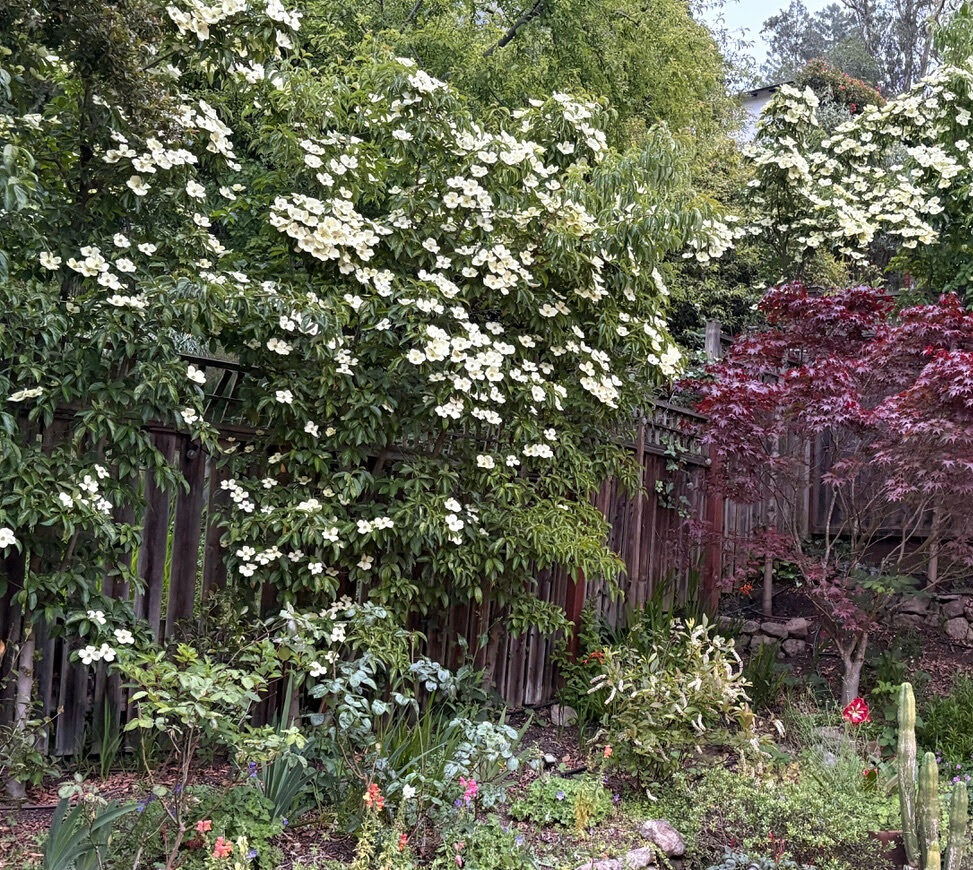
Earlier this year, our Tree Sculpture team was called to assess a row of struggling Evergreen Dogwoods in Berkeley. The trees were showing signs of stress, thinning foliage, and poor overall vigor during the winter months. While cooler weather and dormancy can sometimes make ornamental trees appear subdued, it was clear there were underlying health concerns contributing to their decline.
After inspection, our arborists identified a combination of factors impacting the trees:
- Thrips activity affecting foliage health
- Nutrient deficiencies
- Poor clay soil conditions on a slope, limiting root performance and drainage


On March 31st, our team performed a targeted tree health treatment that included a blend of fertilizers, soil amendments, and a systemic insecticide application (Merit 2F) to address the pest pressure and improve overall root-zone conditions.
Just over a month later, the results have been encouraging.

With warmer spring weather helping stimulate growth, the trees have responded well to treatment and are beginning to show off the ornamental characteristics Evergreen Dogwoods are known for. Improved foliage color, fuller growth, and stronger overall appearance are all signs the trees are recovering and responding positively.
One of the challenges with tree and plant healthcare is that results are not always immediate or highly visible in a short timeframe. Many treatments are preventative or designed to improve long-term health gradually over seasons. That’s why it’s especially rewarding when we’re able to revisit a property and clearly see positive change taking place.
This project is also a reminder that tree decline is often tied to multiple environmental factors working together — soil conditions, nutrition, pest pressure, drainage, and weather all play a role. Proper diagnosis is critical to creating an effective treatment plan.
Our team will continue monitoring these trees as the growing season progresses, but this is an excellent example of how proactive tree healthcare and soil-focused treatments can help stressed landscape trees recover and thrive.
If you have trees showing signs of decline, discoloration, thinning canopies, or poor growth, early assessment can make a major difference in preserving long-term health and appearance.